PUBLIC AND SOCIAL PROPERTY · HOUSING ASSOCIATIONS
Keep external repair instructions and returned records connected.
Give housing-association repairs, asset and contractor teams a controlled record across property and provider boundaries.
Designed for: Housing-association property, repairs, asset, compliance-support and contractor-management teams.
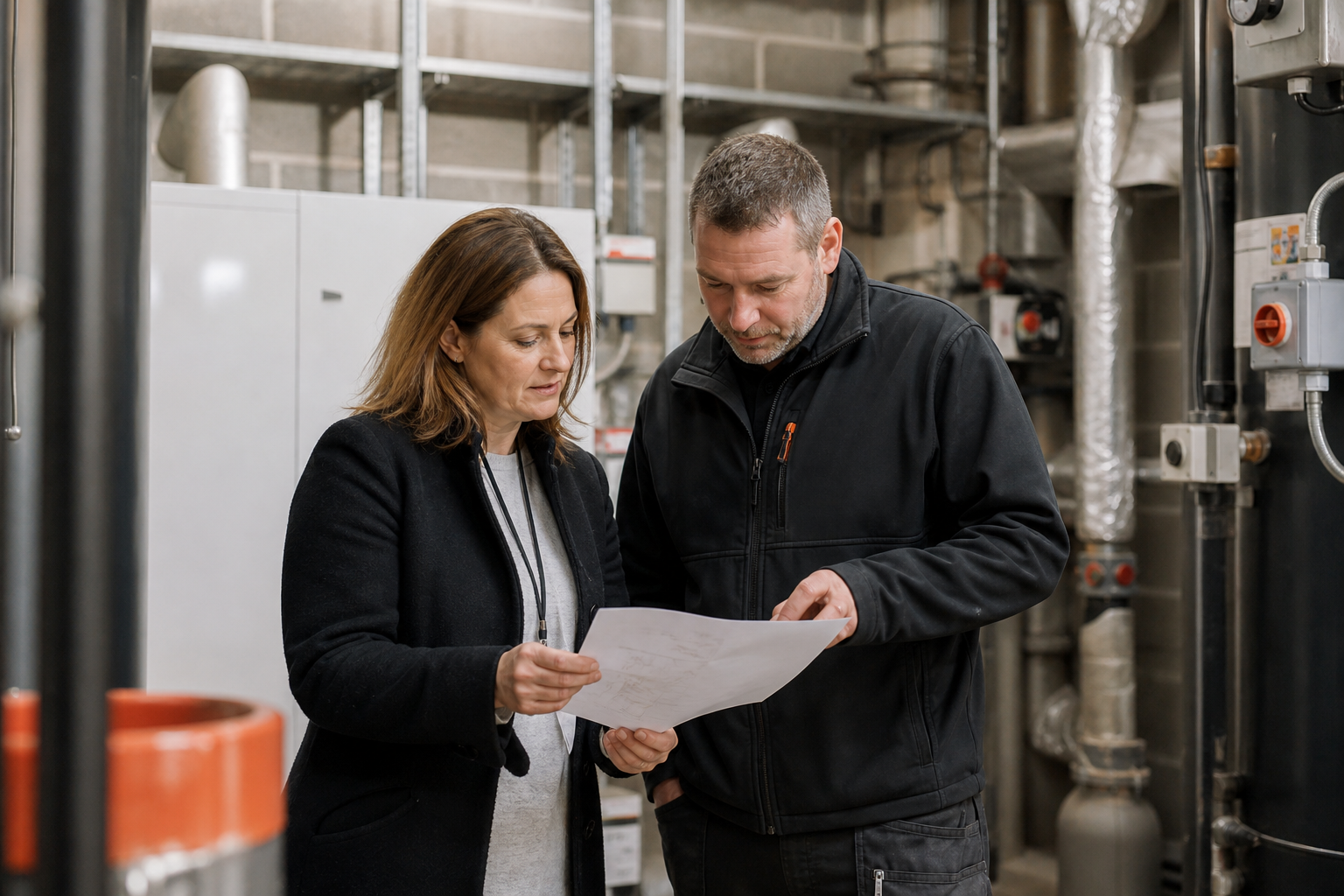
THE OPERATING PROBLEM
Where the record becomes fragmented.
Responsive repairs, planned maintenance, void works and communal services create many handoffs between landlord teams and external providers.
An instruction can be acknowledged in one channel, updated in another and returned through a third, leaving uncertainty about which version the requester accepted.
SUITABLE WORKFLOW
From bounded instruction to accepted return.
- 01
Create a synthetic property or communal-area instruction without unnecessary resident detail.
- 02
The intended provider accepts or declines.
- 03
The provider returns declared completion notes and evidence metadata.
- 04
The requester rejects an incomplete submission or accepts the corrected version and receipt.
WHAT IS RECORDED
- landlord instruction and provider
- property or work-order context
- acceptance, decline and declared return
- rejection, correction and requester acceptance
WHAT IS NOT PROVED
- statutory compliance
- tenant-case status
- disrepair adjudication
- inspection or payment certification
- resident identity
- attendance or workmanship
EXISTING SYSTEMS
A bounded record—not a system replacement.
Housing-management, repairs, asset, compliance and contractor systems continue to manage cases, appointments, obligations and payments. Verified Dispatch preserves a narrow cross-boundary exchange.
Read the factual product referencePRACTICAL SCENARIOS
Where this workflow can be useful.
Responsive repair
Keep the approved property reference, scope and provider return connected without exposing a resident.
Void-property works
Record a specialist instruction and return in an unoccupied fictional property context.
Communal corrective work
Show why a return was rejected and which corrected version the landlord requester accepted.
WHOLLY SYNTHETIC EXAMPLE · VD-HA-615
Oakstead Community Homes
No organisation, property, person, claim or work order in this example is real.
Instruction created
Repair a fictional communal handrail fixing at Juniper House under work order OCH-1192 and return declared actions plus file metadata.
Intended recipient
Northgate Repairs Co-operative
Provider response
Accepted by the contractor desk.
Returned information
Version 1 declared replacement but omitted the communal-area code.
Requester review
The repairs coordinator rejected v1; v2 added JH-COM-L2 and was accepted.
Final versioned receipt
VD-HA-615-R2 preserves the corrected accepted provider version.
Explicit boundary
It does not identify a resident, prove attendance or workmanship, adjudicate disrepair, certify compliance or authorise payment.
PRACTICAL FAQ
Questions from housing associations teams.
Can this manage resident repair cases?
No. Tenant contact, vulnerability, appointments, complaints and case management remain in approved housing systems.
Does it certify housing compliance?
No. It can record a declared return but does not provide statutory compliance or inspection certification.
Can rejected evidence be corrected?
The requester can reject the submission, state the requested correction and accept a later version.
RELATED AUDIENCES
Compare the neighbouring workflow.
CONTROLLED PILOT
Discuss a controlled housing repairs pilot
Define one bounded workflow, synthetic or approved pilot data, named roles, success criteria and explicit claim limits.
Start a pilot conversation →